
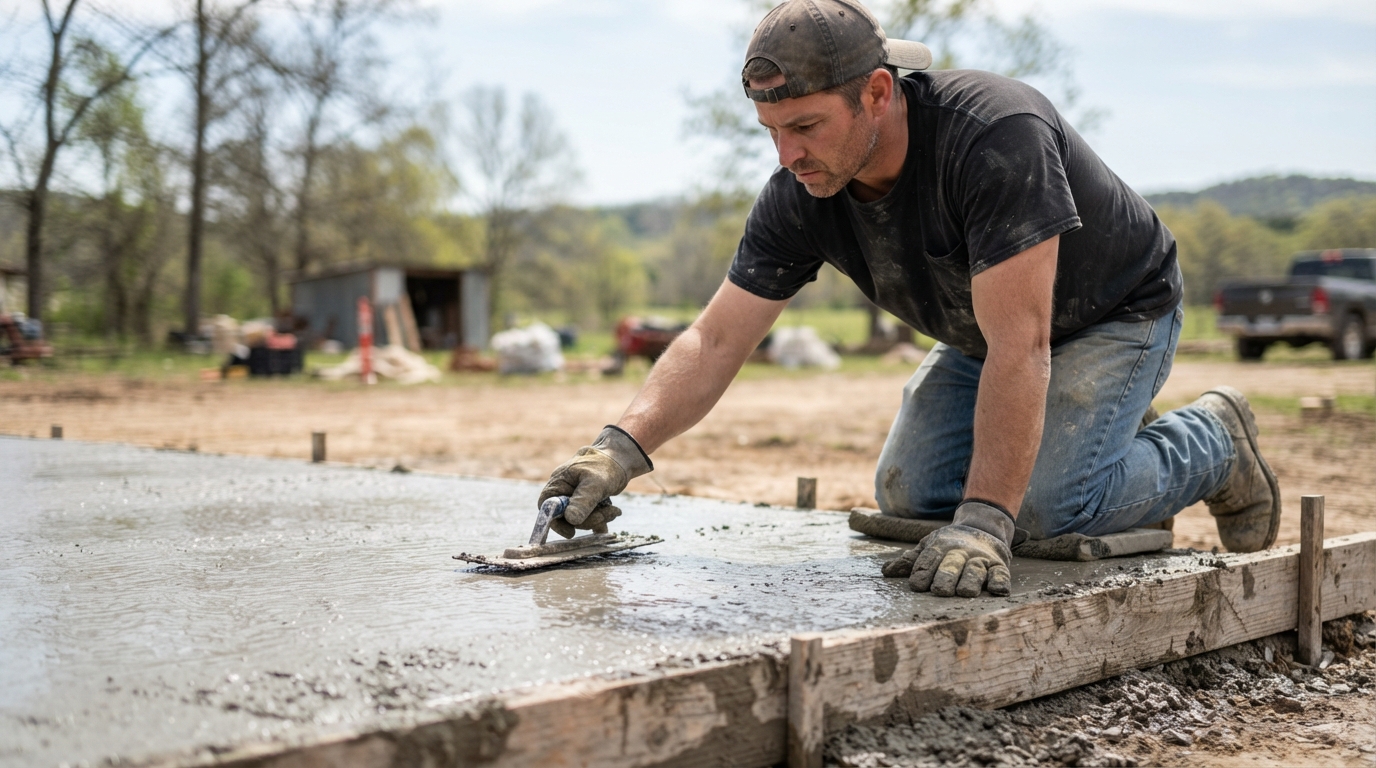
• Concrete services cover flatwork such as driveways, slabs, footings, and pads that support structures and outdoor spaces.
• Site conditions in Freeport, FL, including sandy soil and seasonal rain, affect how concrete is prepared, poured, and cured.
• Planning around curing time, drainage, and local permitting helps concrete surfaces hold up over time.
Concrete services refer to the preparation, pouring, finishing, and curing of concrete for driveways, slabs, footings, patios, and foundation pads. Property owners typically need these services when building new structures, replacing damaged surfaces, or adding a stable base for outbuildings and storage structures.
Concrete Services often serve as a foundational step before other construction work begins, since a level, properly cured slab supports everything built on top of it. For pole barns, garages, and similar structures, the concrete pad needs to be sized and reinforced according to the load it will carry. Skipping proper site prep or curing time is one of the more common reasons concrete surfaces crack or settle unevenly within a few years.
What Concrete Work Typically Involves
Concrete projects generally follow a sequence that affects the final durability of the surface.
• Site preparation : clearing vegetation, grading the area, and compacting the soil base.
• Formwork : building wooden or metal forms that shape the concrete pour.
• Reinforcement : placing rebar or wire mesh for structural strength, especially under heavier loads.
• Pouring and finishing : placing the concrete, leveling it, and applying a surface texture or smooth finish.
• Curing : allowing the concrete to harden gradually, often over several weeks, before it bears full weight.
Each step matters. A pad poured without adequate compaction or drainage planning is more likely to shift or crack, particularly in areas with variable soil moisture.
Local Conditions That Affect Concrete in Freeport, FL
Soil type, drainage, and climate all influence how concrete performs over time, and these factors vary by region.
Soil and Drainage Considerations
Much of the Florida Panhandle, including Freeport, FL, sits on sandy or sandy-loam soils that drain quickly but can shift if not properly compacted before a pour. Grading the site to direct water away from a slab reduces the risk of erosion beneath the concrete. Standing water near a foundation pad is one of the more preventable causes of long-term settling issues.
Weather and Curing Timelines
High humidity and heavy seasonal rainfall in the Florida Panhandle can extend curing times or require scheduling around forecasted storms. The National Weather Service tracks regional precipitation patterns that can inform when pours are least likely to be disrupted by rain. Concrete poured during the wetter months may need additional protective covering to cure evenly.
Permitting
Most municipalities require a permit for new concrete slabs tied to a structure, particularly when the pad supports a building or carries a load-bearing purpose. Checking local building department requirements before work begins helps avoid delays or inspection issues later.
Comparing Common Concrete Applications
|
Application |
Typical Thickness |
Primary Use |
|
Driveway slab |
4 to 6 inches |
Vehicle traffic |
|
Patio or walkway |
3 to 4 inches |
Foot traffic, outdoor living |
|
Structural pad (barns, garages) |
4 to 6 inches, reinforced |
Supporting a building |
|
Footings |
Varies by load |
Below-grade structural support |
Thickness and reinforcement needs depend on intended use and local soil conditions, so a pad meant to support a structure typically requires more reinforcement than a basic walkway.
Business Info
Based in Vernon, FL, Advance Pole Barns serves property owners across Freeport, FL, with concrete and structural work related to pole barns and similar builds.
Frequently Asked Questions
How long does concrete need to cure before it can bear weight? Concrete typically reaches enough strength for light foot traffic within a few days, but full curing for vehicle loads or structural use generally takes around four weeks.
Does soil type affect concrete durability? Yes. Sandy soils common to the Florida Panhandle drain well but require proper compaction before a pour to prevent future settling or cracking.
Is a permit always required for a new concrete slab? Not always, but slabs tied to a structure or exceeding certain sizes often require a permit, so checking with the local building department before starting is recommended.
What causes concrete driveways to crack prematurely? Common causes include inadequate soil compaction, insufficient reinforcement, rapid drying in hot weather, and water pooling beneath the slab.
Looking Into Local Options
Current service area information for Advance Pole Barns is available for property owners evaluating concrete and structural work in the region.