
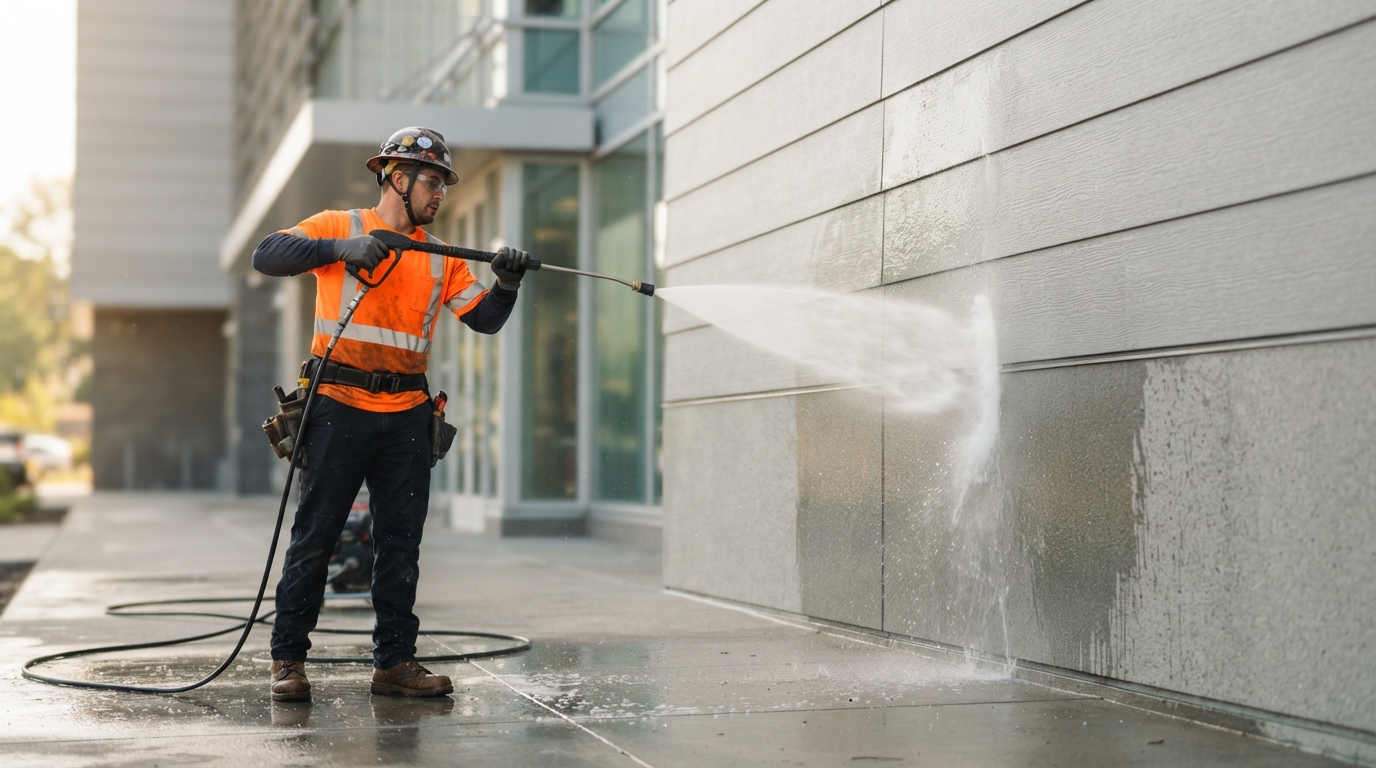
• Commercial building cleaning covers exterior and surface maintenance such as power washing, roof cleaning, and glass cleaning for offices, retail centers, and other commercial properties.
• Federal workplace standards under OSHA 29 CFR 1910 shape how cleaning tasks around walkways, entrances, and common areas should be handled to limit slip and fall risks.
• Cleaning frequency and methods vary by surface type, climate exposure, and building traffic, with Charlottesville, VA properties facing seasonal pollen, humidity, and storm debris.
Commercial building cleaning refers to the routine and specialized upkeep of a property’s exterior and shared surfaces, including siding, roofs, windows, walkways, and storefronts, to maintain safety, appearance, and material longevity. For commercial property owners and facility managers in Charlottesville, VA, understanding what this work involves helps set realistic maintenance schedules and budget expectations.
Exterior upkeep is often handled through Commercial Building Cleaning services that target office buildings, retail centers, storefronts, and apartment complexes using pressure washing and softwash techniques designed to avoid surface damage. These services differ from interior janitorial work, which focuses on floors, restrooms, and common areas inside a building rather than its exterior shell.
What Commercial Building Cleaning Actually Covers
Commercial exterior cleaning is a distinct category from interior janitorial services, though both affect a building’s overall condition and safety profile.
• Facade and siding washing to remove dirt, algae, and grime buildup from exterior walls
• Roof cleaning using low-pressure or softwash methods to clear moss, algae, and staining without damaging shingles or membranes
• Window and glass cleaning for storefronts, office towers, and multi-unit properties
• Hard surface washing for sidewalks, parking lots, loading docks, and dumpster areas
These tasks typically run on a seasonal or semi-annual schedule depending on building exposure, surrounding vegetation, and local weather patterns.
Why Standards and Documentation Matter
Workplace cleanliness around commercial buildings is not purely cosmetic. The Occupational Safety and Health Administration maintains general industry rules that touch on walkways, entrances, and other surfaces where employees or visitors move.
Under 29 CFR 1910.22, walking-working surfaces must be maintained free of hazards such as sharp or protruding objects, loose boards, corrosion, leaks, spills, snow, and ice. The same standard requires that all places of employment, passageways, storerooms, service rooms, and walking-working surfaces are kept in a clean, orderly, and sanitary condition.
For exterior-facing commercial cleaning, this translates into practical obligations:
1. Clearing algae or moss buildup from entry walkways before it becomes a slip hazard
2. Addressing drainage issues around building perimeters after pressure washing
3. Keeping loading docks and parking areas free of debris that could create trip hazards
4. Documenting when exterior surfaces were last inspected or serviced
Facility managers who coordinate exterior cleaning alongside these general housekeeping expectations reduce liability exposure tied to entrances, sidewalks, and common outdoor areas.
Cleaning Methods Compared
Different commercial cleaning methods suit different surfaces and soil types. The table below outlines common approaches used on commercial exteriors.
|
Method |
Best Used For |
Pressure Level |
Typical Frequency |
|
Softwash |
Roofs, siding, stucco |
Low pressure with cleaning solution |
Annually or as needed |
|
Standard pressure washing |
Concrete, sidewalks, parking lots |
High pressure |
Semi-annually |
|
Drone-based washing |
Roofs, upper-story glass, hard-to-reach areas |
Variable, controlled application |
As needed |
|
Hand/pole washing |
Storefront windows, low-level glass |
No pressure |
Monthly to quarterly |
Choosing the correct method matters because high pressure on the wrong surface, such as aged shingles or painted siding, can cause damage rather than cleaning.
Local Considerations for Charlottesville, VA Properties
Commercial properties in Charlottesville, VA deal with a mix of humid summers, pollen-heavy spring seasons, and periodic storm debris that accelerates grime buildup on roofs and siding. Buildings near wooded areas or with significant tree cover tend to need more frequent roof and gutter attention due to organic staining. Seasonal timing, typically after spring pollen settles and before winter moisture sets in, often produces the most durable cleaning results for exterior surfaces in this region.
Based in USA, Elevated Exteriors VA LLC serves customers across Charlottesville, VA, applying drone-assisted and softwash techniques to commercial and residential exteriors. Additional details about the business, including service descriptions and verified listings, are available through its Google Business Profile.
Frequently Asked Questions
How often should a commercial building’s exterior be cleaned? Most commercial exteriors benefit from a full washing at least once or twice a year, though buildings with heavy tree cover, high foot traffic, or coastal humidity may need more frequent attention to roofs, walkways, and entrances.
Does exterior cleaning affect OSHA compliance? Exterior cleaning intersects with OSHA’s walking-working surface rules when it comes to entrances, sidewalks, and loading areas, since those surfaces must stay free of hazards like algae, moss, or debris that create slip risks.
Is pressure washing safe for all commercial building materials? No. High-pressure washing can damage aged roofing, painted siding, and certain stucco finishes, which is why softwash methods using lower pressure and specialized solutions are often preferred for delicate surfaces.
What is the difference between commercial cleaning and janitorial services? Commercial building cleaning generally refers to exterior and surface-level work such as power washing and window cleaning, while janitorial services cover interior tasks like floor care, restroom sanitation, and trash removal.
Final Notes on Maintaining Commercial Properties
Routine attention to a commercial building’s exterior supports both safety compliance and long-term material condition, particularly in climates with seasonal humidity and organic buildup. Current service area information for Elevated Exteriors VA LLC is published online for property owners researching exterior maintenance options.