
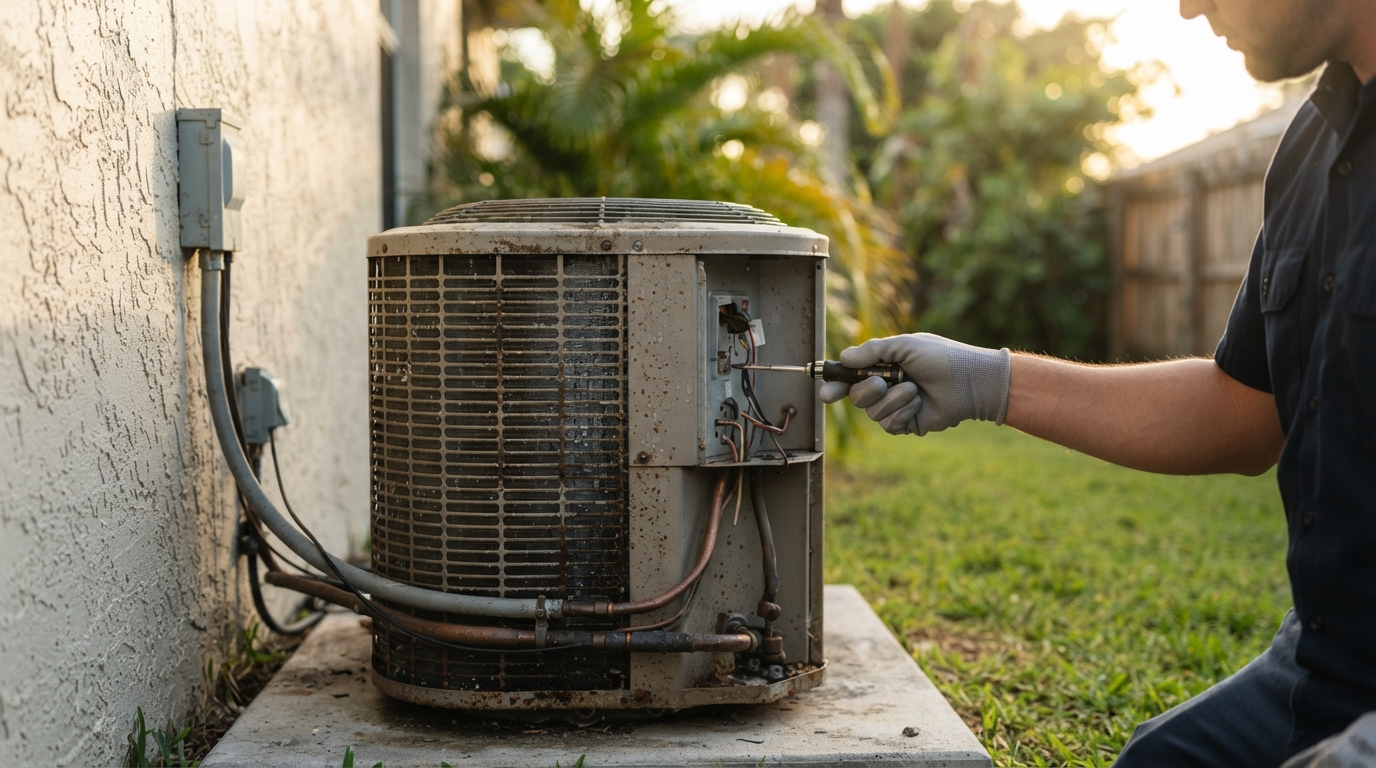
Essentially:
• Warm airflow, frequent cycling, unusual noises, and rising energy bills are the most common signs that a cooling system needs professional attention.
• Refrigerant leaks, dirty coils, failing capacitors, and clogged drain lines account for most residential AC breakdowns in humid coastal climates like St. Petersburg.
• Catching these issues early through routine checks can prevent a minor repair from turning into a full system replacement.
A struggling air conditioner rarely fails without warning. Most breakdowns start with small, recognizable symptoms such as weak airflow, strange sounds, or a system that runs constantly without actually cooling the home.
Homeowners searching for Air Conditioning Repair In St Petersburg FL are usually dealing with one of a handful of recurring mechanical issues tied to Florida’s heat and humidity. Recognizing these patterns early helps homeowners decide when a quick fix will work and when a technician needs to inspect the system before a minor issue becomes a costly one.
Understanding what typically goes wrong, and why, makes it easier to describe the problem accurately when calling for service and to judge whether a repair is being handled correctly.
Warm Air and Inconsistent Cooling
When a system runs but fails to cool the home evenly, the cause is often tied to refrigerant levels or airflow restriction rather than the thermostat itself.
• Low refrigerant charge from a slow leak in the coil or line set
• A dirty or frozen evaporator coil blocking heat exchange
• A clogged air filter restricting airflow through the system
• Undersized or blocked return ducts limiting circulation
Refrigerant does not get used up during normal operation, so a system running low almost always has a leak somewhere in the sealed system. According to the U.S. Department of Energy’s guidance on maintaining an air conditioner, routine filter changes and coil inspections are central to keeping a cooling system operating at peak efficiency.
Strange Noises and Short Cycling
Noises are one of the clearest early warning signs that something mechanical is wearing out or that pressure inside the system is abnormal.
|
Sound or Symptom |
Likely Cause |
Urgency Level |
|
Hissing or bubbling |
Refrigerant leak in lines or coil |
High, needs prompt attention |
|
Clicking on and off repeatedly |
Short cycling from electrical or refrigerant issue |
High, stresses compressor |
|
Grinding or squealing |
Worn motor bearings or belt |
Medium, schedule inspection soon |
|
Banging or rattling |
Loose or broken internal component |
Medium to high depending on part |
Short cycling, where the unit turns on and off rapidly, often points to a failing capacitor, a dirty condenser coil, or improper refrigerant charge. Left unaddressed, this repeated strain shortens compressor life and increases the odds of a complete system failure during peak summer demand.
Water Leaks, Humidity Issues, and Drainage Problems
Florida’s humidity makes condensate drainage a frequent point of failure in residential cooling systems. A clogged condensate drain line is one of the most common service calls technicians receive in coastal climates.
Signs of a drainage or humidity-related problem include:
1. Water pooling near the indoor air handler
2. Visible mold or musty odor near vents
3. Noticeably higher indoor humidity despite the AC running
4. Ice buildup on the evaporator coil or refrigerant lines
These issues often trace back to a blocked drain pan, a cracked drain line, or a coil that has frozen due to restricted airflow. Addressing drainage problems quickly protects both the equipment and indoor air quality, since standing water and excess humidity encourage mold growth in ductwork and walls.
Rising Energy Bills Without Added Usage
A noticeable jump in cooling costs, without any change in household habits or thermostat settings, usually signals reduced system efficiency rather than a rate change from the utility provider.
Common efficiency-draining culprits include:
• Aging or dirty condenser coils reducing heat transfer
• A refrigerant leak forcing the compressor to work harder
• Failing electrical components causing inefficient cycling
• Neglected maintenance allowing dust and debris buildup over time
Comparing a few months of utility bills against outdoor temperatures can help homeowners spot whether their system efficiency is declining gradually or dropping suddenly, which often points to a specific mechanical failure rather than normal seasonal wear.
Frequently Asked Questions
How do I know if my AC problem is urgent? Warm air from vents, visible water leaks, burning smells, or a complete lack of cooling during high heat should be treated as urgent and addressed the same day when possible.
Can a dirty air filter really cause major cooling problems? Yes. A clogged filter restricts airflow, which can freeze the evaporator coil, strain the compressor, and reduce cooling capacity significantly over time.
Why does my AC run constantly but never reach the set temperature? This usually indicates low refrigerant, a failing compressor, or ductwork that is leaking conditioned air before it reaches the living space.
Is it normal for an AC unit to make some noise? A quiet hum or soft whir is normal, but hissing, grinding, or clicking sounds usually indicate a mechanical or electrical issue that needs inspection.
Recognizing these warning signs early gives homeowners a real advantage when deciding whether a system needs a simple tune-up or a more involved repair. Eco Air Florida, a licensed HVAC provider based in St. Petersburg, works on residential cooling systems throughout Pinellas County, including repair, maintenance, and indoor air quality services. Homeowners dealing with any of the symptoms described above can reach out to Eco Air Florida to have a technician diagnose the issue before it escalates into a larger, more expensive repair.