
In short:
- Forged fittings are high-strength, near-net-shape components made for high-pressure piping systems and are governed by ASME B16.11 for dimensions, materials, and pressure ratings.
- Selection depends on end connection type (threaded or socket weld), pressure class, and base material such as carbon, alloy, or stainless steel.
- Sourcing from a domestic manufacturer that builds to customer prints helps projects meet tight tolerances and traceability requirements.
Choosing the right piping components starts with understanding what makes a fitting suitable for high-pressure, high-temperature service rather than general-purpose plumbing use. Forged fittings are manufactured through closed-die forging, a process that compresses heated steel into a die cavity to produce dense, near-net-shape parts with fewer internal defects than cast alternatives. This structural advantage is why engineers specify forged components for pipelines, pressure vessels, and process equipment that cannot tolerate failure under stress.
Cornell Forge Co, a Chicago-based forging manufacturer, produces custom forged steel pipe fittings for original design manufacturers and industrial suppliers working to strict customer prints.
What Defines a Forged Fitting
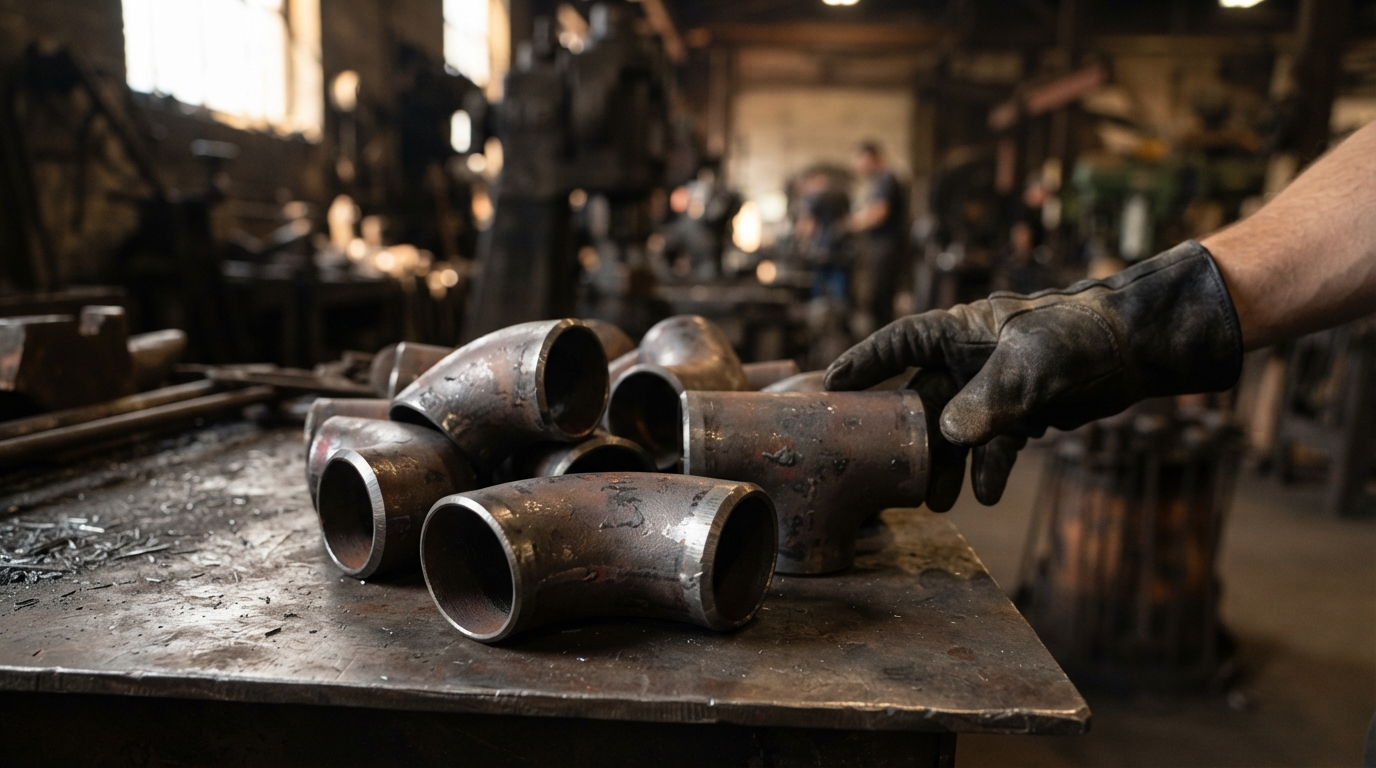
A forged fitting is a pipe connector such as an elbow, tee, coupling, or cap that is shaped from solid steel billet under extreme pressure rather than cast in a mold. The forging process aligns the steel’s grain structure along the shape of the part, which improves mechanical strength and resistance to fatigue.
Key characteristics buyers should verify before ordering:
• End connection type : Threaded or socket-weld, depending on how the fitting joins to adjacent pipe
• Pressure class : Determines the maximum working pressure the fitting can safely handle
• Base material : Carbon steel, alloy steel, or stainless steel, chosen based on the operating environment
• Size range : Matched to nominal pipe size (NPS) requirements for the system
The governing specification for these components in the United States is ASME B16.11, which covers ratings, dimensions, tolerances, marking, and material requirements for socket-welding and threaded forged fittings.
Matching Pressure Class and Material to the Application
Pressure class is not a cosmetic spec. It determines whether a fitting can hold up under the exact conditions of a pipeline, refinery unit, or power plant header without leaking or failing.
|
Connection Type |
Available Pressure Classes |
Typical Size Range |
|
Threaded |
2000, 3000, 6000 |
NPS 1/8 to 4 |
|
Socket-weld |
3000, 6000, 9000 |
NPS 1/8 to 4 |
According to the ASME B16.11 standard, these fittings are designated by class based on end connection, and the standard is meant to be used alongside other ASME B16 series standards and piping codes. Material selection follows a similar logic:
- Carbon steel : Cost-effective and strong, suited to general industrial and oil and gas applications
- Alloy steel : Chosen for elevated temperature or pressure service
- Stainless steel : Selected for corrosive environments such as chemical processing or marine settings
Demand for these material categories remains active. The carbon steel pipe fittings market size is projected to reach $8.11 billion in 2026, growing at a compound annual rate of 5.9 percent according to a 2026 industry market report, driven partly by expansion of oil and gas pipeline networks and industrial construction activity.
Sourcing Considerations for USA-Based Projects
Procurement teams sourcing forged fittings for domestic projects typically weigh a few practical factors beyond price:
1. Print-to-spec accuracy : Confirm the manufacturer builds to your exact prints and tolerances rather than generic stock dimensions.
2. Domestic supply chain : A US-based forge shortens lead times and simplifies compliance documentation compared with overseas sourcing.
3. Material traceability : Verify the supplier can document heat numbers and material certifications for audit purposes.
4. Capability range : Check whether the shop handles carbon, alloy, and stainless steel, since project specs can shift mid-production.
Cornell Forge Co produces fitting-style components built to customer prints and specifications, working with original design manufacturers and industrial suppliers that need forged fittings for high-pressure applications.
Frequently Asked Questions
What is the difference between forged and cast fittings?
Forged fittings are shaped under compressive force, which refines the grain structure and typically improves strength and impact resistance compared with cast fittings, which are poured into a mold and cooled.
What standard governs forged steel pipe fittings in the US?
ASME B16.11 covers dimensions, tolerances, marking, and material requirements for socket-welding and threaded forged fittings used across US piping systems.
Can forged fittings be custom-made to unique specifications?
Yes. Manufacturers can produce custom-design forged fittings with special dimensions or thread configurations when both parties agree the parts still meet the applicable standard’s other requirements.
Which materials are most common for forged fittings? Carbon steel is the most widely used option for general industrial service, while alloy and stainless steel are selected for higher temperature, higher pressure, or corrosive conditions.
Selecting forged fittings comes down to matching pressure class, material, and end connection to the real operating conditions of the system, then confirming the manufacturer can document compliance with ASME B16.11. Projects that skip this verification step risk mismatched components that compromise safety or require costly rework later.
For more information on Forged Fittings, Contact Cornell Forge Co at https://www.cornellforge.com/